Many people leave their desk with a stiff neck, tight shoulders, or a sore lower back. This discomfort does not come from work alone. It comes from posture. Long hours at a fixed desk push the spine into positions it cannot hold for long.
Over time, poor posture compresses the spine. This compression can reduce visible height and change body alignment. A height-adjustable desk helps reduce this stress, but only when used correctly.
Owning the desk is not enough. The real benefit comes from how often it moves and how well it matches the body. A desk should support the spine, not fight it.
Just as people care about how their workspace looks and feels, even shaping a clean visual identity with a text logo maker, using proper desk height can also preserve posture and visible height.
How Height-Adjustable Desks Support Natural Body Alignment
The human spine works best when it stays upright and balanced. Sitting or standing too long in one position causes muscles to tighten. This leads to slouching, forward head posture, and rounded shoulders.
A height-adjustable desk allows posture changes through the day. These changes reduce pressure on the spine and help maintain natural height.
The goal is not constant standing. The goal is controlled movement that keeps the spine active and supported.
When posture improves, the body feels lighter. Many people even notice they stand taller by the end of the day.
Finding the Correct Desk Height When Sitting
Desk height sets the foundation for posture. If the desk sits too high, shoulders rise. If it sits too low, the upper back bends forward.
When sitting, elbows should bend close to a right angle. Forearms should rest level with the desk surface. Wrists should stay straight, not tilted.
Feet must rest flat on the floor. Knees should sit at the same level as hips or slightly lower. This position supports the lower spine and prevents pelvic tilt.
If the chair height forces the feet to lift, a footrest helps restore balance. Proper sitting posture reduces spinal compression and supports long-term height health.
Standing Desk Height and Spinal Balance
Standing desk posture matters just as much. A desk set too high forces shoulder tension. A desk set too low causes slouching.
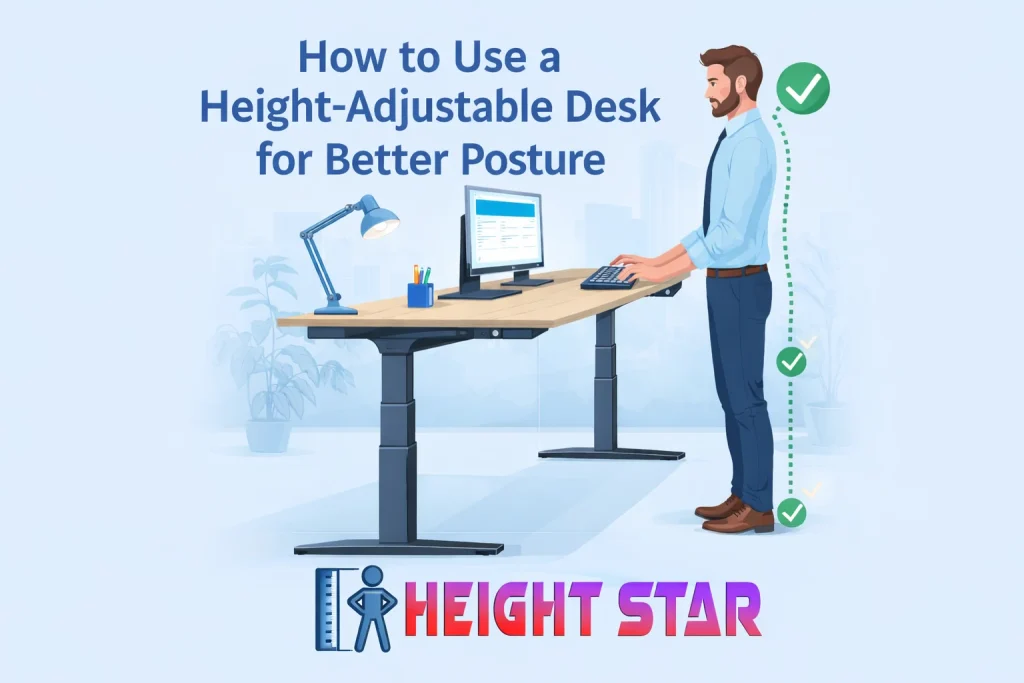
Elbows should meet the desk at the same angle used while sitting. Shoulders should remain relaxed. The head should align over the chest, not lean forward.
Weight should spread evenly across both feet. Locked knees strain the lower back. Soft knees help the spine stay flexible and upright.
If discomfort appears within minutes, the desk height needs correction.
Screen Height and Forward Head Posture
Screen placement often causes the most damage to posture. A low screen pulls the head down. This creates forward head posture, which places heavy strain on the neck and upper spine.
Forward head posture can shorten visible height by several centimeters. It also causes neck pain and shoulder tightness.
The top of the screen should align near eye level. The screen should sit one arm’s length away. Eyes should look forward, not downward.
Laptop users often need a screen riser. A separate keyboard and mouse keep hands at the correct level. This setup protects spinal alignment through long work hours.
Sitting and Standing Is Not a Competition
Many people believe standing all day improves posture. This belief causes new problems. Standing too long strains the lower back and feet.
Sitting too long causes spinal compression. Neither extreme works.
A balanced pattern helps most bodies:
- Sit for 30 to 45 minutes
- Stand for 15 to 30 minutes
- Add short movement between transitions
Movement resets muscle tension and restores posture. This rhythm supports spinal health and helps preserve natural height.
The Role of Foot Support in Posture
Feet form the base of posture. Poor foot support travels upward into the spine.
Standing on hard floors increases joint stress. Flat shoes with weak soles reduce stability. Both lead to posture collapse later in the day.
An anti-fatigue mat reduces pressure on joints. Supportive footwear improves balance and spinal alignment.
Stable footing helps the spine stay upright, especially during long standing sessions.
Keyboard and Mouse Position Affects the Entire Body
Even with perfect desk height, poor hand placement causes posture strain. If the keyboard sits too far forward, shoulders roll inward. If the mouse sits too high, wrists bend.
Hands should stay close to the body. Elbows should remain near the sides. Wrists should stay neutral.
Chronic wrist tension spreads upward into the shoulders and neck. Over time, this affects posture and spinal alignment.
Ergonomic keyboards and vertical mice support better arm positioning. These tools help maintain a relaxed upper body during long work sessions.
Posture, Height, and Daily Energy Levels
Posture affects more than comfort. It affects energy. Slouching restricts breathing and blood flow. Upright posture supports oxygen flow and focus.
Many people feel more alert when standing during light tasks such as emails or video calls. Sitting often works better for tasks that require precision.
Changing posture through the day helps avoid fatigue that leads to slouching. This supports both focus and body alignment.
Micro-Movements That Protect Height
Small movements matter more than long workouts. A short walk, shoulder roll, or desk height change resets posture.
Simple posture checks help:
- Is the head aligned over the shoulders
- Are the shoulders relaxed
- Has one position lasted too long
These checks take seconds but protect the spine all day.
Awareness builds better habits than strict schedules.
Long-Term Posture Benefits of Adjustable Desks
Used correctly, a height-adjustable desk reduces chronic pain. It supports spinal alignment and helps prevent height loss caused by compression.
People often notice improved posture outside work as well. Standing taller becomes natural. Shoulder tension reduces. Neck strain fades.
The desk becomes a support system, not just furniture.
Let the Desk Adapt to Your Body
A height-adjustable desk works best when it responds to the body. Correct height, proper screen placement, and regular movement protect posture.
Over time, these habits support spinal health and visible height. Small adjustments create long-term change.
The desk should move with you, not lock you into one position.